


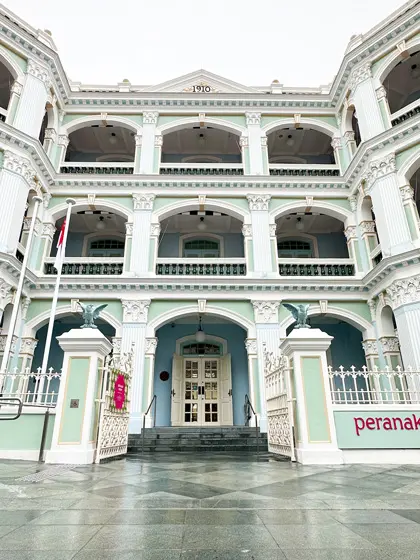
The Peranakan Museum explores the art and culture of Peranakan communities in Southeast Asia, and possesses one of the finest and most comprehensive public collections of Peranakan objects.
On February 17, 2023, the museum reopened its doors after nearly four years of renovation work.
The newly refreshed Peranakan Museum holds brand-new permanent galleries presenting exceptional objects from Peranakan material culture, as well as a more contemporary exhibition design and an enhanced museum visitor experience. In particular, one key shift in the curatorial approach was to also include contemporary expressions of Peranakan culture, by way of works of contemporary art, fashion, design and craft, created by local and regional artists, artisans and designers, and inserted into every gallery.
The three floors of the museum explore Peranakan life through themes related to origins, home, and style as aspects of identity. Community interviews, recorded demonstrations, art commissions, and other contemporary expressions of Peranakan culture provide a multi-faceted experience for visitors, encouraging them to ask themselves: "what is Peranakan?".
The museum is a department of ACM, operating under the National Heritage Board.
BUILDING HISTORY
The Armenian Street building was formerly the Tao Nan School, built in 1912. It was converted into the Asian Civilisations Museum in 1994, which officially opened in 1997. After the Asian Civilisations Museum relocated to Empress Place in 2003, the Tao Nan building was redeveloped into the Peranakan Museum, which opened in 2008. It closed again for major renovations in 2019, reopening in 2023.
1912: Built
The current Peranakan Museum is housed in the former Tao Nan School building at 39 Armenian Street. The architectural plans of the building were approved by the Municipal Engineer’s Office in 1910. Construction of the building was completed in March 1912. Designed in the “Eclectic Classical” style, the building combines fluted columns and symmetrical forms characteristic of Classical architecture, while the balconies fronting the façade reflect architectural adaptations to the tropical climate. Its layout is based on Straits Settlements bungalows, with rooms arranged around a central hall and service spaces located outside the main building.
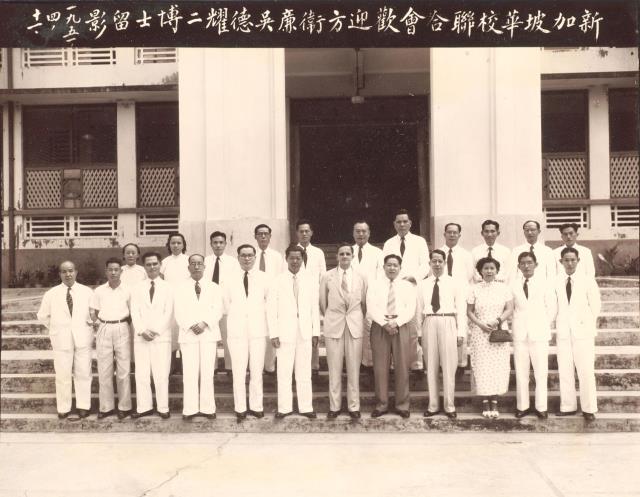 Tao Nan Chinese School
1994–1997: Conversion to Museum
Preparations for the Asian Civilisations Museum began in 1994, with storylines and themes developed, designers and construction companies appointed, and objects selected for display.
The Asian Civilisations Museum officially opened at Armenian Street in 1997. Reflecting the building’s origins as a Chinese school, its galleries initially focused on different aspects of Chinese culture and civilisation.
In 2003, the museum relocated to its present home at Empress Place. Shortly afterwards, the Armenian Street building closed for redevelopment and was transformed into a new museum dedicated to showcasing Peranakan culture, which opened in 2008.
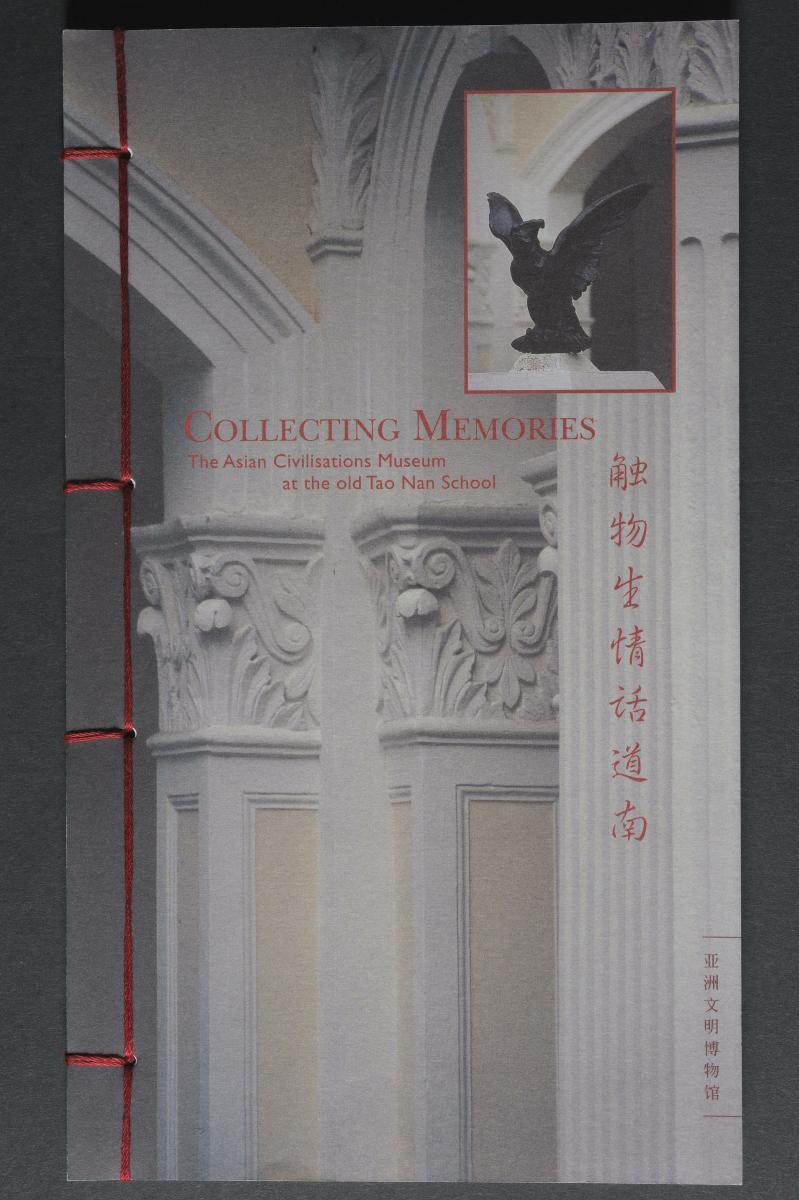 Collecting Memories: The Asian Civilisations Museum at the old Tao Nan School (Singapore, 1997).
2019–2023: Renovation and Reopening
The Peranakan Museum closed in April 2019 for major renovation works, including the redesign of its permanent galleries and visitor spaces. It reopened to the public on 17 February 2023, with over 800 objects on display across three galleries focused on different aspects of Peranakan identity: “Origins”, “Home”, and “Style”.
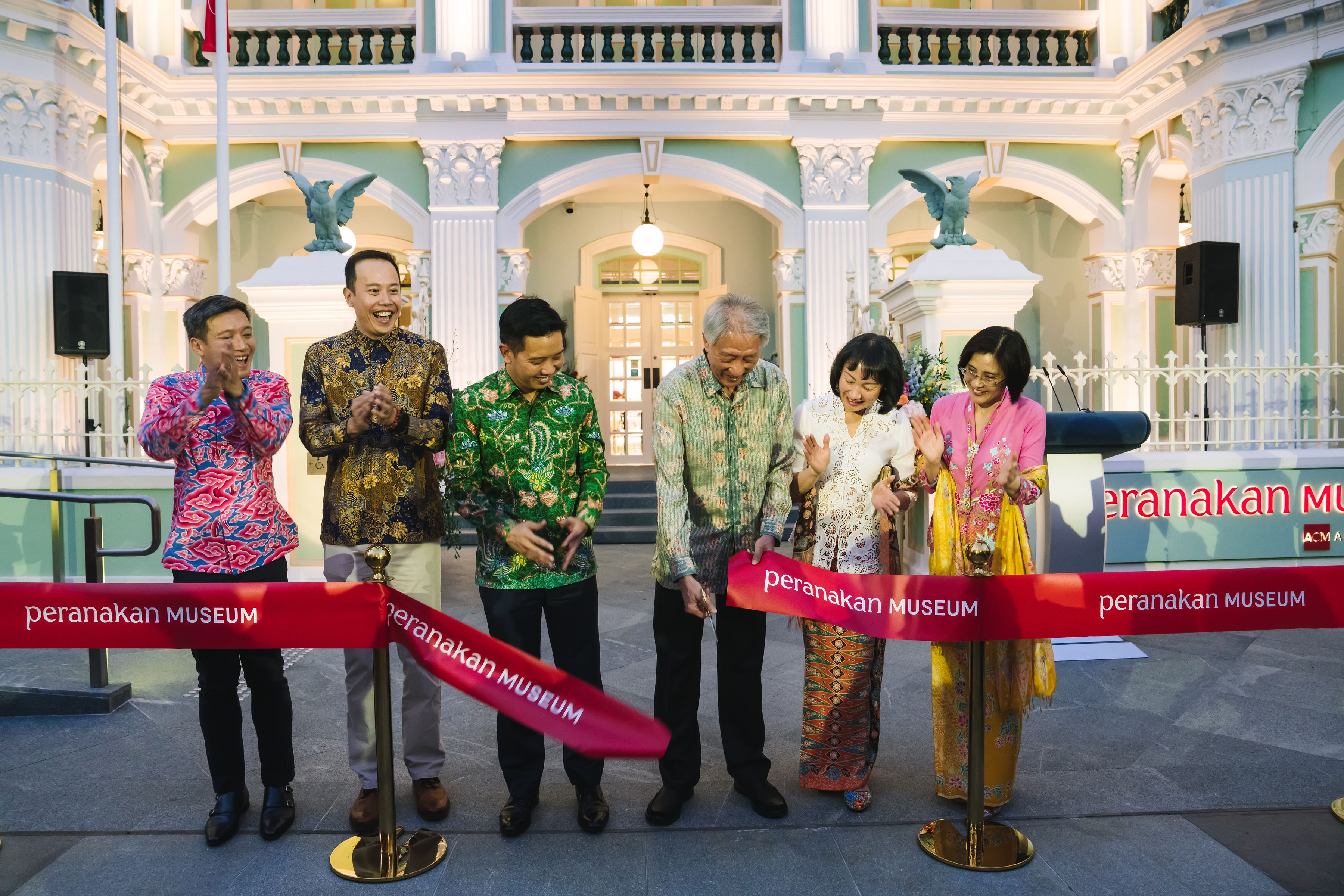 Reopening of the Peranakan Museum in 2023.
The Peranakan Museum reopened to the public 17 February 2023, after nearly four years of renovations.
Displaying over 800 objects, ranging from newly acquired or generously donated objects to well-loved artefacts and set pieces, the museum explores the Peranakan identity through universal themes of “Origins”, “Home”, and “Style”.